
As December’s crisp air sweeps across Bengal’s red earth, Santiniketan awakens to its most cherished tradition. The distant melody of an ektara drifts through banyan groves, calling wanderers to a celebration that has endured for over a century. This is Pous (Poush) Mela—an annual fair marking the winter harvest season, where Rabindranath Tagore’s vision of cultural unity comes alive through folk music, rural crafts, and the spirit of community. In 2025, this UNESCO World Heritage Site once again opens its grounds to those seeking an authentic immersion in Bengali heritage
Poush Mela, Santiniketan 2025: Dates & Rituals
📅 Date: 23rd – 28th December 2025
📍 Venue: Melar Math (Purbapalli Grounds), Visva-Bharati, Santiniketan
⏳ Duration: 6 days
The mela traditionally begins on 7th Poush, with early-morning Vaitalik processions, prayers at Chhatimtala, and gatherings around Uttarayan—rituals that set a contemplative tone before the fair bursts into color and sound.
A Legacy Rooted in History
On December 21, 1843 (7th Poush in the Bengali calendar), Debendranath Tagore and twenty followers embraced the Brahmo faith beside the Kopai River. This momentous day planted the seeds of what would become Poush Mela. In 1894, a small fair was organized to commemorate the anniversary of the Brahma Mandir’s establishment, and what began as an intimate gathering has evolved into a cultural phenomenon.
The fair has been halted only three times: during the Bengal Famine of 1943, Direct Action Day of 1946, and the COVID-19 pandemic. As crowds grew, the mela shifted from the grounds beside the Glass Temple to the expansive Purbapalli fields, where it continues to thrive today.
The Heart of the Mela: Culture and Crafts
Artisan Treasures
Approximately 1,500 stalls fill the fairgrounds, showcasing Bengal’s finest handicrafts. Visitors discover terracotta lamps molded by village artisans, intricate kantha embroidery stitched by rural women, and dokra metalwork—ancient tribal craft transformed into contemporary art. Batik fabrics, leather bags, and handwoven textiles represent generations of skill passed down through Bengal’s creative communities.
The marketplace isn’t merely transactional—it’s conversational. Here, bargaining becomes an art form where stories are exchanged along with goods, and each purchase directly supports rural livelihoods.
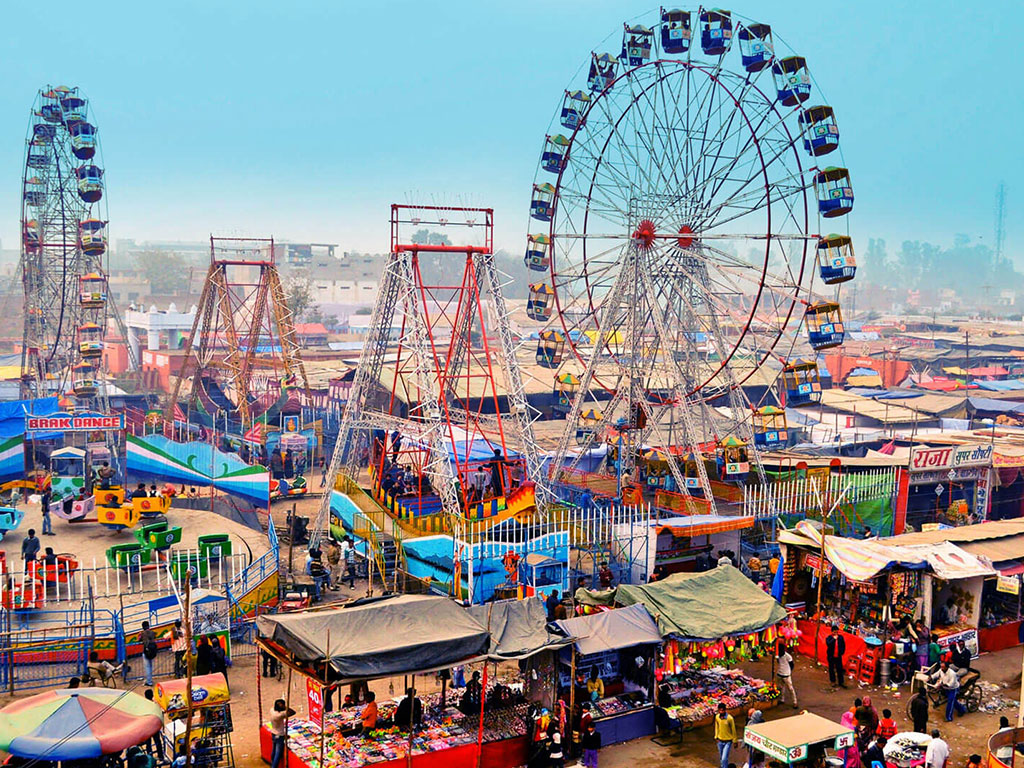
পৌষ তোদের ডাক দিয়েছে, আয়রে চলে আয় – “Poush calls to you, come, come along.”
Music and Performance
Bengali folk music, especially Baul songs, forms the soul of Poush Mela. These mystic minstrels, with their ektaras and dotaras, perform throughout the grounds, their philosophical lyrics exploring themes of love, longing, and spiritual quest. Santhal tribal dancers bring vibrant energy with rhythmic drums and traditional movements that echo ancient harvest celebrations.
Students from Visva-Bharati University honor Tagore’s legacy through performances of Rabindra Sangeet, folk theater, and puppet shows. Cultural programs run from 6 PM to 11 PM daily, transforming the grounds into an open-air auditorium under starlit skies.
Culinary Delights
Bengali winter cuisine takes center stage at Poush Mela. Bhapa pitha—steamed rice cakes filled with coconut or sesame—are dunked in jaggery syrup. Food stalls serve luchi paired with spicy aloo tarkari, crispy fish kabiraji, and hearty mutton ghugni. Sweet lovers indulge in patishapta, malai kulfi, and rosogolla, while Santhal vendors offer refreshing ginger-lemon sharbat to cut through the richness.
Planning Your Visit
🚆 How to Reach
- Rail: Bolpur–Santiniketan station (well-connected from Kolkata)
- Road: Buses and cars from Kolkata (approx. 3–4 hours)
- Air: Kolkata airport, followed by road or train
🏡 Stay Options
Homestays, guest houses, and small resorts fill up fast during mela days. Booking early is strongly advised, especially near the Visva-Bharati campus.
Essential Tips
- Entry: The mela is free and open to all
- Timing: Stalls operate from 9 AM to 6 PM, with cultural shows from 6 PM to 11 PM
- Weather: December brings pleasant days and cool evenings—dress in layers
- Currency: Carry cash for stall purchases; many vendors don’t accept digital payments
- Crowds: Daily attendance averages 3,500 visitors, rising to 40,000 on peak days
- Best Time: Arrive early morning to explore stalls before crowds, and stay for evening performances
Beyond the Mela
Extend your visit to explore Santiniketan’s cultural landmarks: Uttarayan (Tagore’s residence), Kala Bhavana’s art galleries, and the serene Glass Temple. The nearby Sonajhuri Haat offers additional handicraft shopping in a picturesque setting.
Sustainable Celebrations
Following Santiniketan’s 2023 UNESCO World Heritage designation, organizers have implemented eco-friendly initiatives including improved waste management systems, aligning with conservation goals for this culturally significant site.
The Spirit of Poush Mela
What distinguishes this fair is its raw authenticity—no polished stages, just earth-touched grounds alive with folk tradition. Here, tribal artisans trade beside university scholars, Baul philosophers converse with urban professionals, and strangers become friends over shared plates of pitha.
Poush Mela embodies Tagore’s vision: education harmonized with life, urban meeting rural, tradition embracing change without losing essence. It’s a space where Bengal’s soul—creative, philosophical, generous—reveals itself to those willing to slow down and listen.
Frequently Asked Questions
Q: What are the exact dates for Poush Mela 2025?
A: December 23-28, 2025, spanning six days beginning on the 7th of Poush in the Bengali calendar.
Q: Is there an entry fee?
A: No, the mela is free and welcomes all visitors.
Q: What should I buy?
A: Authentic handicrafts including kantha embroidery, batik textiles, terracotta items, dokra metalwork, and leather goods. Each purchase supports rural artisan communities.
Q: What’s the best way to experience the music?
A: Arrive at the grounds around sunset. Find a spot under the banyan trees where Baul musicians gather, and let their mystic melodies transport you.
Q: Can families with children attend?
A: Absolutely. The puppet shows, tribal dances, and food stalls offer engaging experiences for all ages. The open-air setting is child-friendly, though keep an eye on little ones in crowds.
Q: What makes Poush Mela different from other fairs?
A: Its intimate connection to Tagore’s philosophy, the emphasis on folk traditions over commercial entertainment, and the genuine interaction between rural artisans and visitors create an experience that’s culturally immersive rather than merely touristic.
A Final Invitation
As you wander through Poush Mela’s dusty paths, sampling pitha, bargaining for batik, and swaying to Baul songs, you’re participating in a living tradition that has nourished Bengal’s creative spirit for generations. This is more than a winter fair—it’s a reminder that in our fast-paced world, there remain spaces where art, philosophy, and community still flourish together.
Come to Santiniketan this December. Let the mela’s rhythm slow your heartbeat to match the land’s ancient pulse. Discover why, after more than a century, this gathering continues to captivate souls seeking authenticity in an increasingly curated world.